Lupine Publishers | Surgery & Case Studies: Open Access Journal

Abstract
Introduction: Given the frequency of blood transfusion in the intensive care unit, it must be performed according to the recommendations to ensure transfusion safety. The aim of our study is to describe the practice of transfusion in a surgical resuscitation service.
Methods: This is a 21-month retrospective and descriptive study (January 2015 - September 2016) in the Department of Surgical Resuscitation of the University Hospital JRA Antananarivo Madagascar. All patients over 15 years old and transfused during the study period are included.
Results: 937 patients were transfused, with a transfusion rate of 25.3%. A male predominance (sex ratio = 2.21) was found with an average age of 45.93 (± 17.74) years. Digestive haemorrhage and postoperative cases are common reasons for transfusion. The blood count and the haemostasis assessment were performed in 58.38% and 50.48% of pre-transfusion patients, respectively. The red blood cell (RBC) is the most used (54.72%), followed by Fresh Frozen Plasma (FFP) (28.68%) and then there have been cases of use of Platelet – Rich Plasma (PRP) (12.93%) and Whole Blood (2.67%). The transfusion event occurred only in 0.43% of patients.
Conclusion: The realities of the country explain the insufficiency of biological arguments for transfusion. And the absence of a well-defined haemovigilance system makes transfusion accidents unrecognized and undeclared. Hence the interest of a transfusion protocol adapted to the Malagasy context.
Introduction
A blood crase disorder is a common occurrence in Intensive Care Unit (ICU) [1]. In general, it is anaemia or a haemostasis disorder. These disorders are at the same time the consequence of the initial pathology motivating the admission in resuscitation but also a factor of aggravation of the pre - existing pathology or the pathology responsible for the admission [2]. To correct these disorders, the use of transfusion is often necessary. But for a good practice of transfusion, like any therapeutic act, it must respect some recommendations [3]. So, this study was done in order to describe the practice of transfusion in intensive care unit of University Hospital /JRA, Antananarivo, Madagascar. accidents, and the blood tests before and after transfusion (haemoglobin, platelet count, prothrombin level). The data were processed by the XLSTAT software version 2019 and the results are expressed as mean with standard deviation, minimum and maximum, and as a percentage.
Results
Table 1: General characteristics.
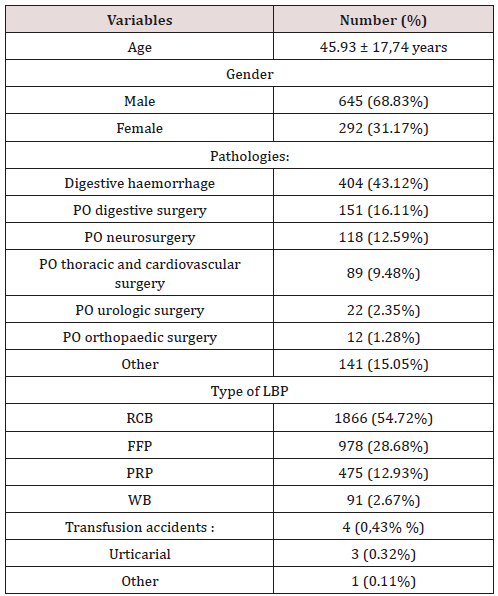
Of the 3700 patients hospitalized in the department during the study period, 937 patients (25.3%) met the inclusion criteria. The average age of these transfused patients was 45.93 (± 17.74) years; with a minimum age of 15, the maximum age was 92. The male gender was predominant (645 patients, 68.83%, sex ratio = 2.21). Digestive haemorrhages and post-operated cases held the top spots in the pathologies presented by these transfused patients, with 43.12% and 41.83% respectively. On the other hand, other pathologies (such as trauma, haemoptysis, haematuria, inflammatory anaemia, leukaemia, various tumours, shock conditions, etc.) were also significant as a reason for blood transfusion with a total of 15.05% (Table 1). Of the 937 patients transfused; before transfusion, 58.38% had a blood count and 50.48% had a haemostasis test; and after the transfusion, only 23.80% had a blood count and the haemostasis assessment was performed in 16% of the patients. The mean haemoglobin level ranged from 92.49 (± 32.49) g/l during the pre-transfusion period to 105.78 (± 22.27) g/l post transfusion. Mean pre-transfusion platelet count was 185.26 (± 117.61) giga / l and 193.70 (± 125.47) giga/l in post transfusion. The prothrombin level (PL) was 62.17 (± 22.74) % before transfusion and 67.13 (± 20.26) % after transfusion (Table 2). Simple transfusion accounted for 99.79% and transfusion exchange 0.21%. The total amount of blood units received by the patients was 3410 with 54.72% red blood cell (RBC), 28.68% fresh frozen plasma (FFP), 12.93% platelet rich plasma (PRP) and 2.67% Whole Blood (WB). Each patient receives on average 2 units of RBC, 1 unit of FFP, 0.5 unit of PRP (Figure 1). There were only 4 cases of transfusion accident including 3 urticarial and 1 dyspnoea andchills.
Figure 1: Variation of transfused LBPs.
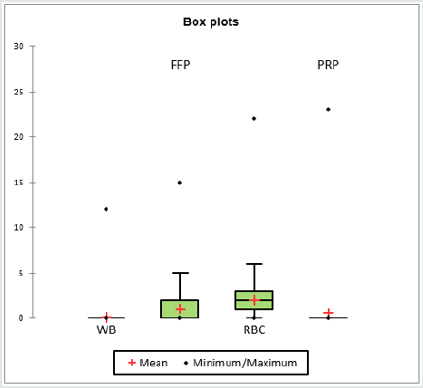
Table 2: Evolution of biological test in pre and post transfusion.

Hb: Haemoglobin; PLT: Platelet; PL: Prothrombin Level; Pre: Pre-Transfusion; Post: Post Transfusion
Discussion
Resuscitation or intensive care unit is the place where admitted a patient whose vital function is at risk or likely to be. Haematological disorder can enter in this framework of vital function. And often, transfusion is necessary to correct these disturbances. In our case, the frequency of transfusion is 25.3%. In other countries such as Ivory Coast, Denmark, and Canada, they have found transfusion frequency rates of 20%, 25%, and 38% respectively [4-6]. And still according to these studies, these figures are quite high and a policy of reducing consumption of LBP deserves to be implemented. Regarding the profile of transfused patients, there is a male predominance with a low average age (45 years). Unlike those found in studies conducted in occidental countries where the average age is around 60 years [7,8]. The advantage of this relatively low age is the existence of low tolerance thresholds for anaemia; in general, the haemoglobin trigger is 70g/l for a young patient with no antecedent [9]. And for the pathologies presented by these transfused patients, these are the same etiologies that are reported in the literature; that is, trauma, heavy surgery and gastrointestinal bleeding, but of varying proportions [10]. And about the transfusion itself - apart from a simple transfusion, there is, but in a small proportion, the practice of transfusion exchanges in our case. Erythrocyte transfusion exchange is most often indicated during complications of sickle cell disease [11], which is similar to our case. And the use of CGR is the most common in our practice due to the frequency of anaemia during hospitalization in resuscitation. According to the literature, more than 55% of patients admitted to resuscitation have a haemoglobin level of less than 90g/l [10]. In our case, the average pre-transfusion haemoglobin level was 92.49 g / and there was a one-point post-transfusion gain for the haemoglobin level. It should be noted that the pre- and post-transfusion biological assessment rate in our practice is quite low. Since the biological assessment for deciding a transfusion or not is not always available, a study, similar to that carried out by Kranenburg FJ et al. [12] who sought predictive factors for transfusion, deserves to be instituted. This is in order to properly codify the transfusion practice by limiting the consumption of LBP and avoiding its complications. However, these complications can be dangerous and engage the prognosis of the patient [13]. In our case, the frequency rate of these complications is abnormally low. Three contingencies can explain this Figure 1, so that the frequency of these accidents is so low, it would require a quality technical platform and a good haemovigilance system; which is not our case. The other eventualities would be that other cases of transfusion complications exist but remain undeclared or unknown, hence the interest of protocolisation of transfusion safety [14].
Conclusion
This study allowed us to profile transfused patients and describe the practice of transfusion in a surgical resuscitation of a university hospital in Madagascar. In this time of LBP shortage [15], this study could improve transfusion practice not only by streamlining the use of PSLs, but also to limit transfusion accidents.
Read More Lupine Publishers Surgery and Case Reports Journal Articles: https://surgery-casestudies-lupine-publishers.blogspot.com/



 is the relative displacement of the cross section of the
electro elastic actuator along
is the relative displacement of the cross section of the
electro elastic actuator along  axis,
axis,  is the control parameter in
the form the electric field strength of the electro elastic actuator
along i axis on the interval [0,t], the initial value of the electric
field strength
is the control parameter in
the form the electric field strength of the electro elastic actuator
along i axis on the interval [0,t], the initial value of the electric
field strength  the value of t, the initial value the relative
displacement
the value of t, the initial value the relative
displacement  and the sign of the rate
  of the electric field
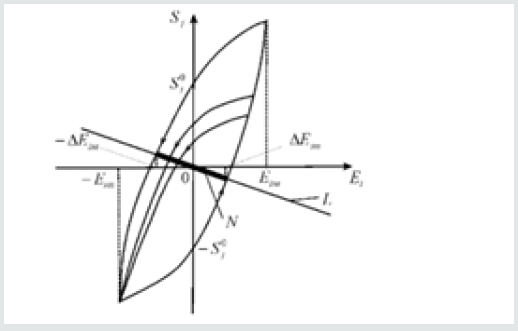
strength variation. Let us consider hysteresis characteristic of the
deformation of the electro elastic actuator on (Figure 1). The set
of the electric field
strength variation. Let us consider hysteresis characteristic of the
deformation of the electro elastic actuator on (Figure 1). The set
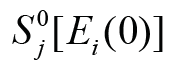 the vertical segment
 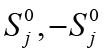 bounded by the points of
intersection of the ordinate axis with the hysteresis loop at the
maximum admissible field strength in the piezoactuator. We receive
for the stable linear part of the control system the stationary set N
and the equation for the straight-line L has the form
bounded by the points of
intersection of the ordinate axis with the hysteresis loop at the
maximum admissible field strength in the piezoactuator. We receive
for the stable linear part of the control system the stationary set N
and the equation for the straight-line L has the form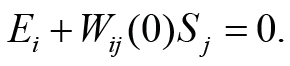
 of the linear part of the control system. The set of points N for
intersection of this straight line L with the hysteresis characteristic
represents the segment of the straight line marked. At
of the linear part of the control system. The set of points N for
intersection of this straight line L with the hysteresis characteristic
represents the segment of the straight line marked. At 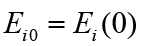 and
and
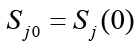 we have the stationary solution to the control system with
hysteresis on Figure 1. We obtain the stationary set in the form of the
marked segment N of straight-line L in Figure 1 with the set
of pairs
we have the stationary solution to the control system with
hysteresis on Figure 1. We obtain the stationary set in the form of the
marked segment N of straight-line L in Figure 1 with the set
of pairs 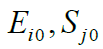 The set of points N for intersection of this straight
line L with the hysteresis characteristic. For the stationary set the
equation has the following form
The set of points N for intersection of this straight
line L with the hysteresis characteristic. For the stationary set the
equation has the following form 
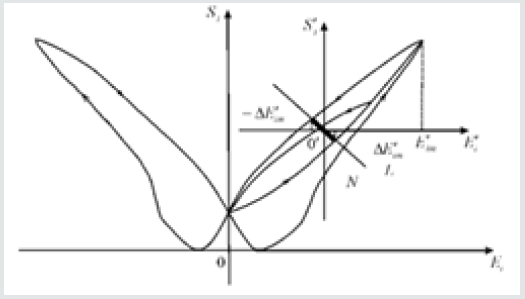
 the hysteresis loop of the piezoactuator and the quantities of
the derivative
the hysteresis loop of the piezoactuator and the quantities of
the derivative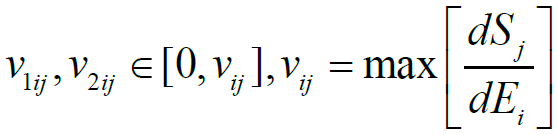

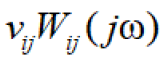
 is the amplitude-phase characteristic of the
open-loop system and in brackets j is the imaginary unity and
is the amplitude-phase characteristic of the
open-loop system and in brackets j is the imaginary unity and 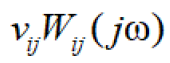 is the frequency The amplitude-phase characteristic of the openloop
system
is the frequency The amplitude-phase characteristic of the openloop
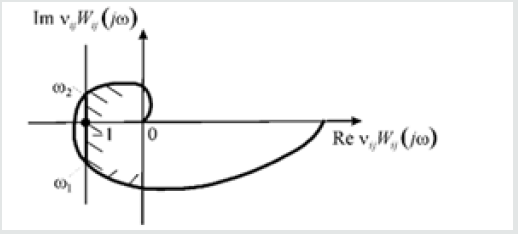
system  on (Figure 3) should be situated to the right
of the straight line
on (Figure 3) should be situated to the right
of the straight line